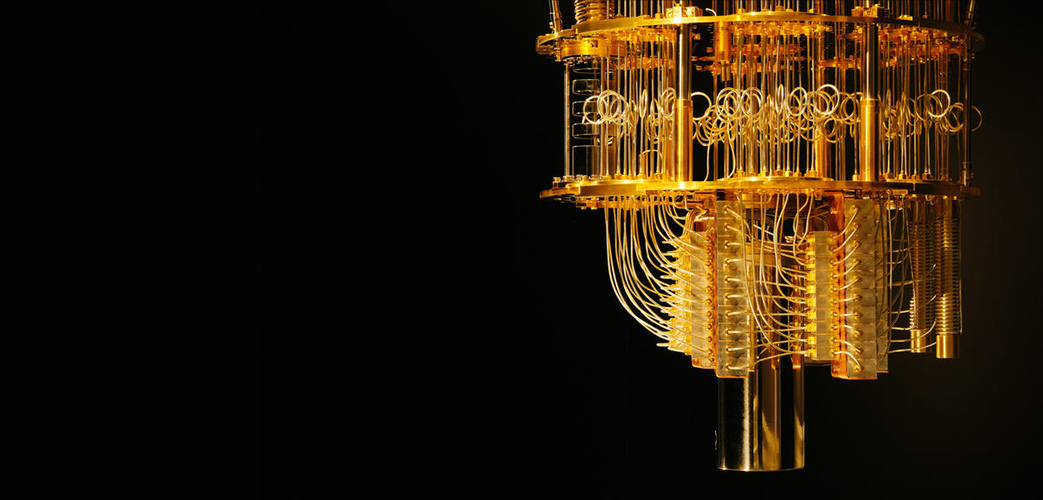
Quantum vs Classical Computing: Simple First Steps
When we talk about computing, the main difference between classical and quantum systems lies in how they represent and process information.
Classical computers, which underpin most modern IT infrastructure, operate on bits: simple units of data that can take the value of either 0 or 1. You might picture this as a librarian who checks one book at a time, moving quickly but always sequentially.
Quantum computers, on the other hand, rely on qubits. Unlike classical bits, qubits can exist in a state of 0, 1, or a superposition of both, allowing them to explore multiple possibilities at once. In our librarian analogy, this would be like a clerk capable of reading many books simultaneously: a kind of parallelism that classical systems cannot achieve. This gives quantum machines the potential to solve certain problems much faster than classical ones.
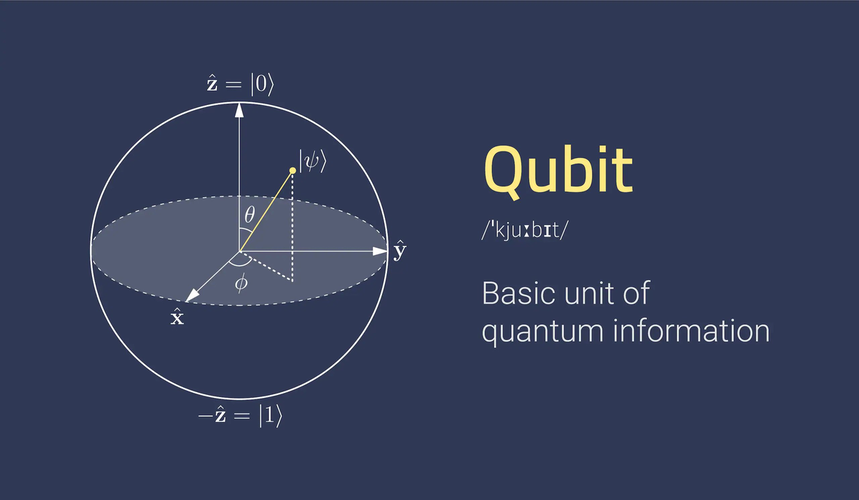
From a cybersecurity perspective, this is not just a fascinating scientific development but a serious concern. Many of today’s cryptographic standards, such as those based on the difficulty of factoring large prime numbers, would become vulnerable once practical quantum computing is achieved. This is why organizations like NIST are working on post-quantum cryptography to prepare security teams for the coming paradigm shift.
Why Is Quantum a Problem for Current Cryptography?
The security of modern public-key cryptography, such as RSA, Diffie-Hellman, and elliptic-curve cryptography (ECC), is based on mathematical problems that are extremely hard for classical computers to solve. Factoring a large number or solving a discrete logarithm would take astronomical amounts of time, making these systems the backbone of secure communication, digital signatures, and key exchanges.
However, the discovery of specialized quantum algorithms changes everything. Shor’s algorithm, the most famous one, can efficiently factor large numbers and solve discrete logarithms on a powerful quantum computer. If such machines become practical, the assumptions behind RSA and ECC would collapse, allowing attackers to decrypt data, forge signatures, or impersonate trusted entities.
The impact doesn’t stop there. Grover’s algorithm offers a quadratic speedup for brute-forcing symmetric encryption keys. While this doesn’t break symmetric cryptography entirely, it effectively reduces the security strength of current key sizes, meaning we need to increase key lengths (for example, doubling AES keys).
The biggest threat lies with public-key algorithms, which enable authentication and key exchange across the internet. This is where post-quantum cryptography (PQC) comes in. PQC focuses on developing cryptographic methods based on problems that are hard for both classical and quantum computers.
The goal is not to rebuild security from scratch, but to replace vulnerable algorithms with quantum-resistant alternatives for signatures, encryption, and key exchange.
Organizations like NIST are leading this effort, pushing forward the standardization of PQC algorithms so that organizations can start transitioning now, well before quantum computing poses a real-world threat to global cybersecurity.
Available Solutions: What’s Already Moving from Research to Standards
The cryptography community has been preparing for the quantum era long before practical quantum computers became a reality.
Anticipating the threat to existing public-key systems, researchers have spent years designing and analyzing new algorithm families capable of withstanding quantum attacks.
To coordinate this effort, the U.S. National Institute of Standards and Technology (NIST) launched a global, multi-round competition in 2016, inviting academics, industry experts, and governments to propose and evaluate potential replacements.
After several years of testing, cryptanalysis, and performance evaluation, NIST announced a small set of algorithms that will form the foundation of post-quantum cryptography (PQC) standards.
Two main families stand out in these efforts:
- Lattice-based cryptography: relies on the difficulty of finding short vectors in high-dimensional lattices. These schemes are efficient, scalable, and currently among the most practical and widely recommended approaches to PQC.
- Hash-based cryptography: built on the one-way properties of cryptographic hash functions. Hash-based signature schemes are conservative and simple in principle. Although they often have larger signature sizes, they provide strong and well-understood security guarantees.
From this process, NIST selected four algorithms for standardization and deployment:
- CRYSTALS-Kyber, for key establishment
- CRYSTALS-Dilithium, for digital signatures
- FALCON, for digital signatures with compact outputs
- SPHINCS+, a hash-based digital signature scheme
These four represent the leading edge of quantum-resistant cryptography and are expected to become the backbone of secure communication in a post-quantum world.

Credit: N. Hanacek/NIST
How Organizations Can Prepare?
Preparing for the post-quantum era doesn’t require access to a quantum computer. The most effective steps security teams can take today are practical measures that lay the groundwork for a smooth transition. The goal is to build awareness, flexibility, and resilience into your cryptographic infrastructure before the standards fully mature.
Here are eight concrete actions IT and security leaders can start implementing now:
Inventory your cryptography
Map out where public-key algorithms are in use across your environment: TLS handshakes, VPNs, code-signing systems, firmware updates, S/MIME, SSH keys, PKI infrastructures, and certificates. Visibility is critical, as you can’t protect what you don’t know exists.Classify data and lifetimes
Identify sensitive data that needs to remain confidential for years or decades, such as intellectual property, medical records, or government archives. Adversaries could be harvesting encrypted traffic today to decrypt later, a concept called “store now, decrypt later.” Long-lived secrets deserve priority protection.Adopt crypto agility
Design systems so algorithms can be swapped or added without disruptive refactoring. Modular TLS stacks, configurable key management services, and dual-stack or layered deployments make future migrations less painful.Start hybrid deployments
Begin experimenting with hybrid key exchange: combining a classical algorithm (e.g., ECDH) with a PQC algorithm. This ensures an attacker would need to break both to succeed. Hybrid deployments reduce risk and give teams hands-on experience. Many vendors already offer hybrid libraries and prototypes.Track vendor roadmaps and standards
Monitor NIST publications, FIPS updates, and announcements from cloud providers, OS vendors, and open-source libraries like OpenSSL or OpenSSH. Aligning with vendor support and emerging standards ensures smoother adoption.Test in staging
Integrate PQC-enabled libraries into test environments and measure their real-world impact. Check performance, key sizes, signature sizes, and interoperability. Lattice-based schemes are generally efficient but come with different tradeoffs compared to RSA or ECC.Update policies and procurement
Require suppliers to report cryptographic dependencies, ask about PQC roadmaps during RFPs, and add clauses mandating crypto agility in new contracts. This ensures your ecosystem evolves alongside your own readiness.Train your team
Educate developers, operations teams, and leadership with targeted briefings. Everyone should understand both the risks and the migration strategy. This builds confidence and avoids bottlenecks later in the transition.
By taking these steps, organizations can begin their quantum-readiness journey without needing to become quantum researchers themselves. The key is positioning your infrastructure so that when NIST standards are finalized and vendor tooling matures, you’ll be ready to move quickly and securely.
Conclusion – Short and Practical
Quantum computers pose a real threat to today’s public-key cryptography, but post-quantum cryptography (PQC) offers a path forward. NIST has already standardized algorithms like Kyber, Dilithium, FALCON, and SPHINCS+ to help secure communications against future quantum attacks.
As Benjamin Lesieux, developer at Alice and Bob, notes:
“We will have quantum computers powerful enough to break RSA or ECC by the end of the 2030s. It’s impossible to achieve zero risk. Lattice-based cryptography is considered safe, but we can never be certain it’s unbreakable. That’s why it’s crucial to keep following innovations and scientific publications.”
The message is clear: don’t wait. Start by inventorying your cryptography, classify long-lived data, build systems with crypto agility, and test PQC options, ideally in hybrid mode.
Think of current cryptography as a padlock and quantum computers as a developing master key. PQC is the next-generation lock you’ll want in place before the threat arrives.
Sources and Further Reading
- NIST – NIST Announces First Four Quantum-Resistant Cryptographic Algorithms (July 5, 2022)
- NIST Releases First 3 Finalized Post-Quantum Encryption Standards (August 2024)
- NIST PQC Overview and FAQs (CSRC)
- NIST Announcements and FIPS Approvals (August 13, 2024)
- Intro to Lattice-Based Cryptography (Red Hat explainer)
- Quantum-Safe Cryptography – IBM Quantum Cloud Courses
- NIST – Comments Requested on Three Draft FIPS for Post-Quantum Cryptography (2023)
- Alice & Bob – Quantum Computing Insights
- Alice & Bob – Roadmap Whitepaper
- Quantum Institute, Université de Sherbrooke, Canada